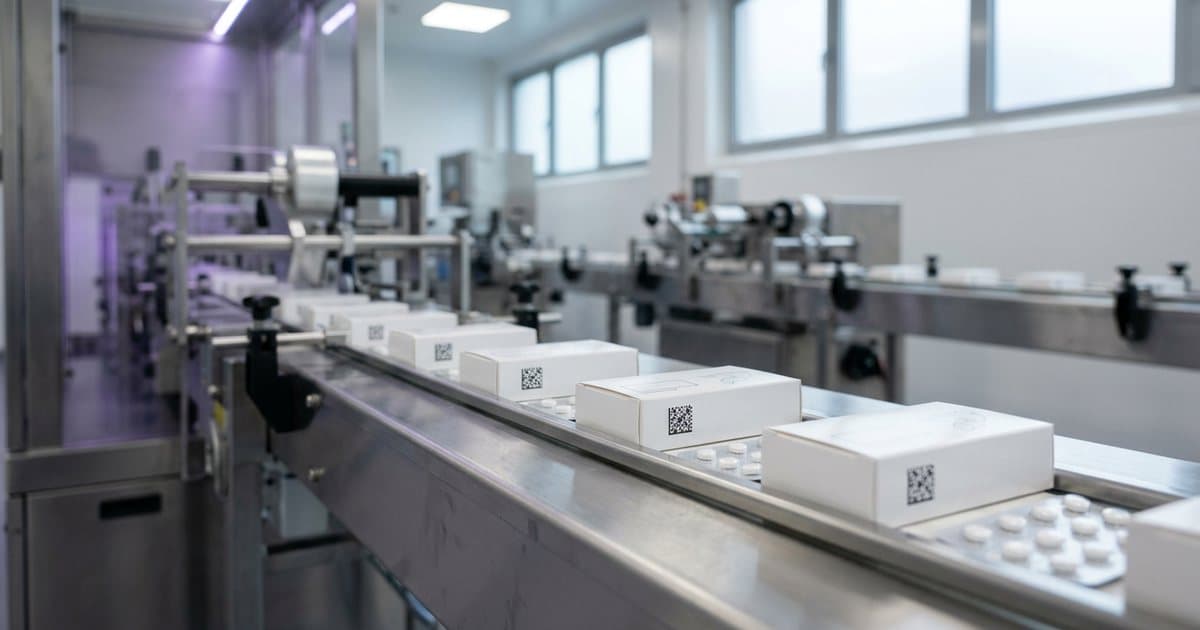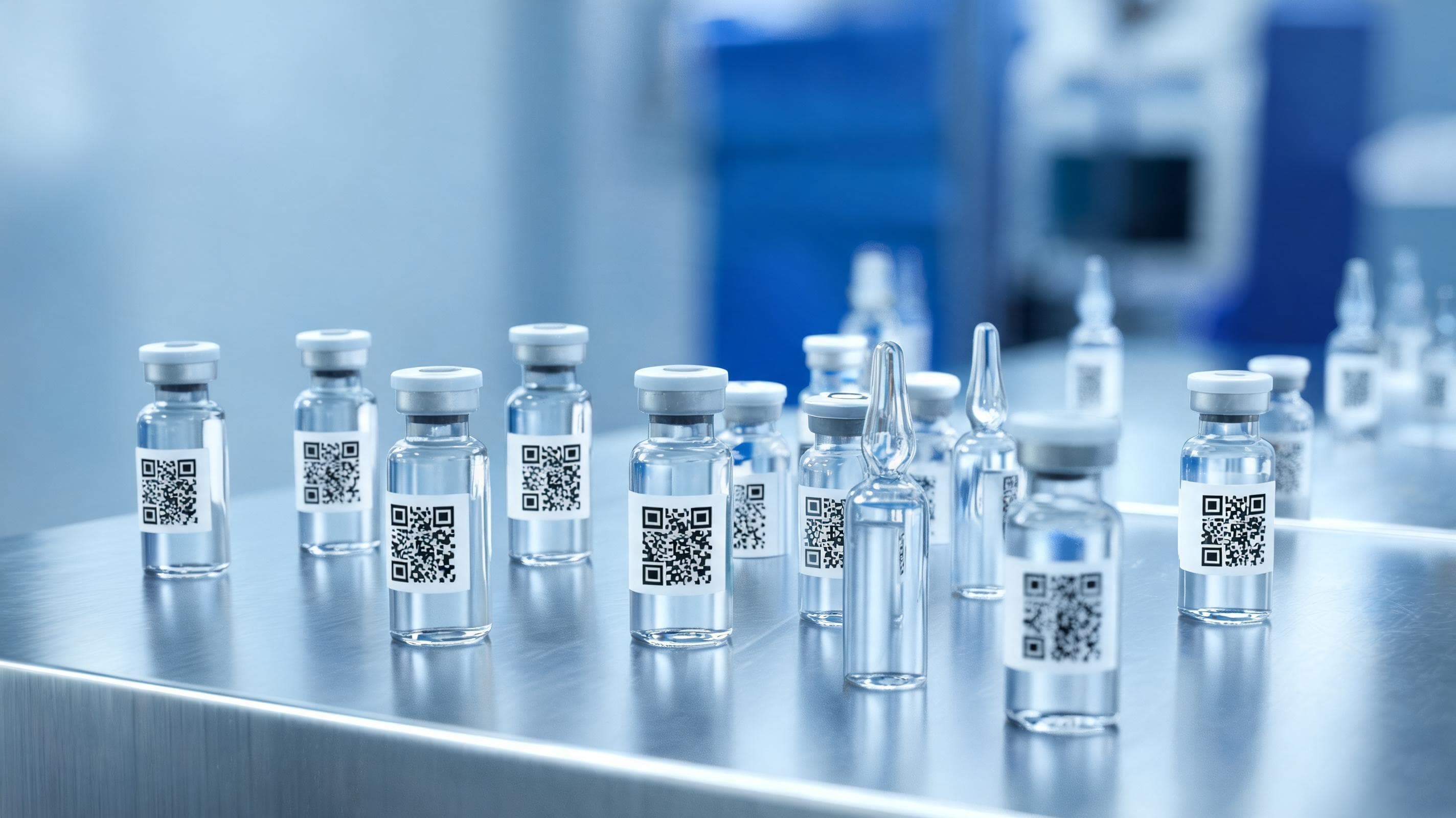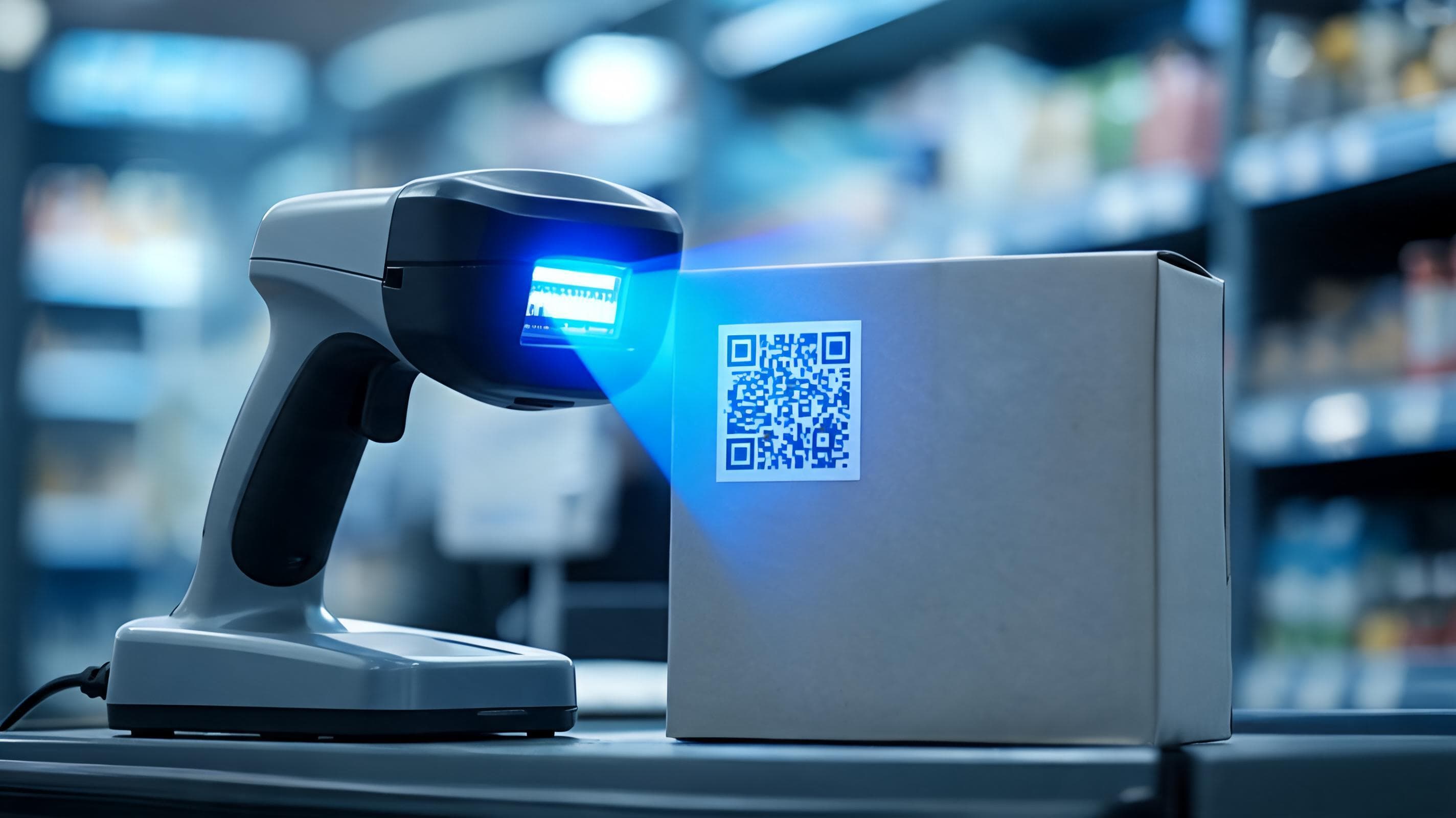
The barcode that gets scanned at every Indian kirana counter, supermarket till and pharmacy has barely changed since it first appeared on retail packaging. That is about to end. Under an initiative called GS1 Sunrise 2027, retail point-of-sale systems around the world are being upgraded to read 2D barcodes — QR codes and Data Matrix codes — alongside the familiar linear barcode, with the goal of global 2D capability by the end of 2027. According to GS1 US, industry groups in 48 countries representing roughly 88% of global GDP have committed to the transition.
For Indian manufacturers this is not a distant retail-technology story. If your products sell through modern trade in India, or export to any major market, the codes you print in 2026 and 2027 will determine whether your packs work smoothly through the transition — and whether you capture the consumer-engagement and traceability upside that 2D codes unlock. Here is what GS1 Sunrise 2027 means in practice and what an Indian manufacturer should do about it.
What GS1 Sunrise 2027 actually is
Sunrise 2027 is a coordinated industry migration, led by GS1 and major retailers, from the one-dimensional EAN/UPC barcode to two-dimensional codes at retail point of sale. The linear barcode carries one thing: a product identifier (the GTIN). A 2D code can carry the GTIN plus batch number, expiry date, serial number and a web address — in a fraction of the space.
Three practical consequences follow:
- Checkout systems learn to read QR and Data Matrix codes. Retail scanners and POS software are being upgraded so a 2D code on pack scans at the till exactly as a linear barcode does today.
- One code can serve every audience. Encoded as a GS1 Digital Link URI, the same QR code rings up at checkout, opens product information for a shopper's phone, and carries batch and expiry data for inventory and recall systems.
- Expiry-aware retail becomes possible. When the code itself carries the expiry date, the till can block the sale of expired stock and inventory systems can rotate short-dated goods automatically — a meaningful shift for food and pharmacy retail.
The dual-marking period: what your packs need until POS catches up
No one expects every till on earth to be upgraded on the same day. GS1's transition guidance is dual marking: packs carry both the traditional linear barcode and the new 2D code during the migration, and the linear code stays until at least 90% of point-of-sale systems in a market can reliably scan 2D. For packaging teams, that means the near-term design question is not "which code?" but "where do both codes go?"
Dual-marking rules of thumb that save pain later:
- Keep the two codes physically separated on the pack so a scanner does not read both at once — GS1 guidance covers placement, but as a baseline avoid placing them side by side on the same face.
- Make sure both codes encode the same GTIN. A mismatch between the linear barcode and the 2D code is the fastest way to create checkout chaos and retailer chargebacks.
- Test print quality at production speed. A QR code that verifies on a proof can still fail on a flexible film run; grade your printed codes, not your artwork files.
What Indian manufacturers should do, step by step
- Get your GS1 India membership and company prefix in order. Your GTINs must be issued under a licensed prefix. If your barcodes were inherited from a distributor or bought from a non-GS1 reseller, fix that first — retailers increasingly validate GTIN ownership against the GS1 registry.
- Choose GS1 Digital Link as your 2D format. A Digital Link URI embeds the GTIN (and optionally batch, expiry and serial) inside a web address on your own domain. It satisfies retail scanning and gives every consumer with a phone camera something useful when they scan. We cover the standard in depth in our GS1 Digital Link guide.
- Decide your data depth per category. A shampoo bottle may only need GTIN-level identification. A food product benefits from batch and expiry in the code. A product with counterfeiting exposure should carry a unique serial per unit, which is what enables authentication and scan analytics.
- Rework artwork on your natural refresh cycle. Most brands revise packaging artwork periodically anyway. Folding the 2D code into scheduled refreshes between now and 2027 spreads the cost and avoids a panicked all-SKU sprint against the deadline.
- Coordinate with your retail and export customers. Ask your modern-trade accounts and export buyers when their POS estates will scan 2D, and whether they have placement requirements. Exporters should assume major developed markets move earliest.
- Pilot one SKU end to end. Print, scan at a real till, scan with a consumer phone, and confirm the Digital Link resolves to the right experience. One honest pilot surfaces more issues than a quarter of meetings.
Why this is an opportunity, not just a compliance chore
The defensive case for Sunrise 2027 readiness is straightforward: packs that scan everywhere, no retailer friction, no relabelling emergencies. The offensive case is bigger. Once every pack carries a serialized, web-resolvable identity, the brand suddenly owns a direct channel to whoever is holding the product — no app install, no retailer permission.
That identity layer is also the foundation for product authentication. India's regulators are already moving the same direction: the pharma QR mandate expanding through 2027 and 2028 requires GS1-prefix-based codes on vaccines, anti-cancer drugs and antimicrobials. A manufacturer who builds GTIN-plus-serial infrastructure once can serve retail scanning, regulatory compliance and anti-counterfeit verification from the same codes — three programmes, one investment.
The brands that treat Sunrise 2027 as a packaging-artwork problem will spend the money and get a barcode. The brands that treat it as an identity-infrastructure problem will spend similar money and get a consumer channel, a traceability backbone and an authentication layer.
The cost of waiting
Because the deadline reads "2027", it is tempting to file this under next year's problems. The arithmetic argues otherwise. Packaging printed today is still in the channel when POS estates flip: film and carton stocks are bought in long runs, distributor pipelines hold months of inventory, and export consignments printed this year will be scanned at foreign tills well after their POS systems have migrated. A pack that carries only a linear barcode is not wrong yet — but it forfeits the shelf life of every 2D-capable scanner it meets.
The failure modes of lateness are mundane and expensive: a compressed artwork sprint across the whole SKU range at agency rates, GTIN clean-up under deadline pressure when a retailer starts validating registry ownership, relabelling stock for an export buyer who moved early, and — the quiet one — watching competitors own the scan moment on the shelf while your pack stays mute. Every one of these costs more than the same work done on a normal artwork refresh cycle between now and 2027. The transition is unusually forgiving to early movers: dual marking means nothing breaks by adding the 2D code early, while everything about waiting compounds.
Frequently asked questions
Does GS1 Sunrise 2027 make linear barcodes obsolete in 2027?
No. The end-2027 milestone is about point-of-sale systems being capable of reading 2D codes globally. Linear barcodes remain on packs through a dual-marking period, and GS1 guidance keeps them until at least 90% of POS systems in a market reliably scan 2D. Plan for both codes to coexist on packaging for some years.
Is Sunrise 2027 a legal mandate for Indian manufacturers?
Sunrise 2027 itself is an industry initiative, not a law. But it becomes binding in practice through retailer requirements and export-market expectations — and separate Indian regulations, such as the pharma QR mandate, do carry legal force and specify GS1-based codes. The direction of travel is the same either way.
Should the 2D code be a QR code or a Data Matrix?
For consumer-facing retail packs, a QR code encoding a GS1 Digital Link URI is usually the better choice because every smartphone camera can read it natively, which unlocks consumer engagement and authentication. Data Matrix remains common in healthcare and industrial marking where space is extremely tight and scanning is done by professional equipment.
What does serialization add on top of basic Sunrise compliance?
Basic compliance needs a GTIN in a 2D code — the same code on every unit of a SKU. Serialization gives each unit its own identity, which is what makes per-unit authentication, warranty registration, diversion detection and precise recalls possible. If counterfeiting or grey-market leakage costs you money, serialize; the incremental effort is modest once the 2D infrastructure exists.
Where Qrynto fits
Qrynto generates serialized, cryptographically signed QR identities in GS1 Digital Link format — GTIN, batch and serial in a standards-compliant URI on your domain — so one code serves retail scanning, consumer engagement and per-unit authentication, with AI fraud scoring watching every scan. If you are planning your Sunrise 2027 transition, book a demo and we will map the migration against your SKU portfolio, or explore the full feature set to see what a serialized identity layer makes possible.