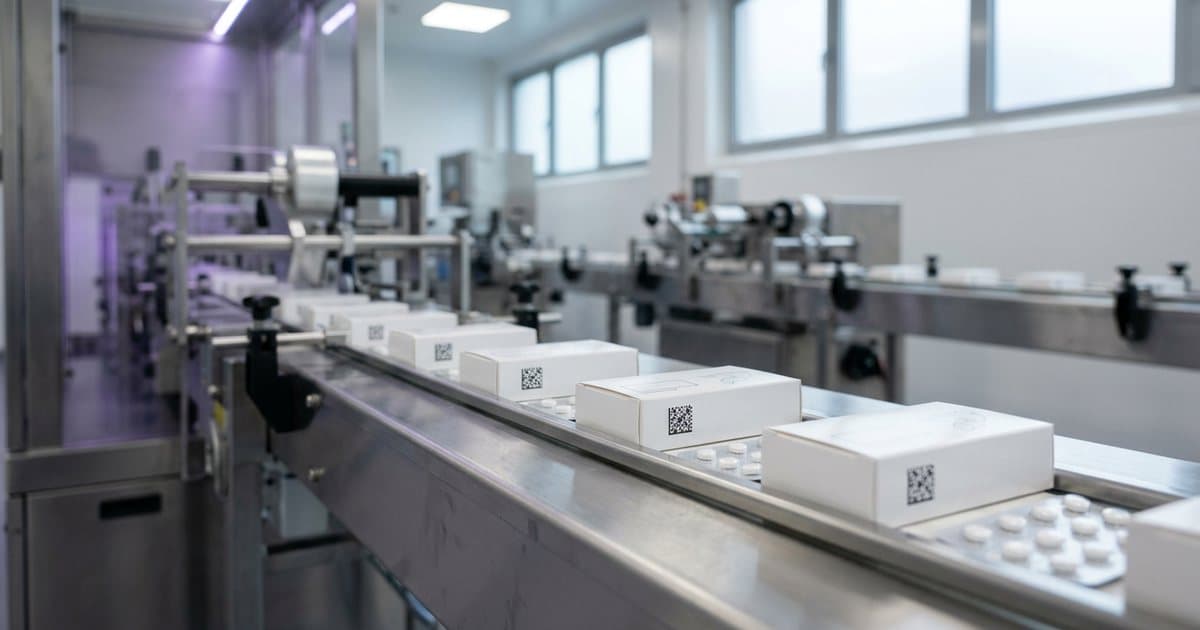
Walk any wholesale market in India and you can buy convincing copies of almost anything — shampoo sachets, engine oil, branded snacks, cosmetics, cement bags. The packaging is the battleground: for most products, the pack is the only thing standing between a counterfeiter and your customer. FICCI CASCADE and the Thought Arbitrage Research Institute put India's illicit market across five key industries at ₹7.97 lakh crore in 2022-23 — with textiles at ₹4.04 lakh crore, packaged foods at ₹2.24 lakh crore and personal & household care at ₹0.74 lakh crore. Those are categories where the product itself is easy to imitate, which means the pack has to do the protecting.
This guide maps the anti-counterfeit packaging toolbox — tamper evidence, security inks and materials, and serialized digital identity — and, more importantly, explains when each layer earns its place. The goal is not maximum features; it is the right stack for your product's price point, channel and threat model.
First, know your attacker
Anti-counterfeit packaging defends against three distinct attacks, and mixing them up leads to buying the wrong protection:
- Imitation — a counterfeiter manufactures lookalike packaging from scratch and fills it with fake product. Defence: features that are hard to reproduce and easy to check.
- Refilling — genuine packaging is recovered (or diverted empty) and refilled with fake or adulterated product. Common in liquor, lubricants, agrochemicals and premium cosmetics. Defence: tamper evidence that destroys the pack's reusability.
- Diversion and relabelling — genuine product moved to unauthorised markets or re-marked (changed expiry dates, upgraded grades). Defence: identity and traceability, not physical features.
The packaging protection toolbox
Tamper-evident features: kill the refill economy
Tamper evidence makes opening irreversible and visible. The main options:
- Induction seals and membrane liners on bottles and jars — cheap, effective, and their absence is obvious to consumers.
- VOID and destructible labels — leave a visible "VOID" pattern or shred on removal, so a seal cannot be peeled and reapplied.
- Shrink sleeves and neck bands — must be destroyed to open; full-body sleeves also make label-swapping impractical.
- Breakable caps and single-use closures — standard in spirits and pharmaceuticals; the closure physically cannot be resealed.
- Tamper-evident cartons — glued flaps and tear strips that show first opening on secondary packaging.
When it fits: any category with a refill attack — liquor, edible oils, lubricants, agrochemicals, personal care. Tamper evidence is table stakes there, but note what it does not do: it says nothing about whether the pack itself is genuine. A counterfeiter can buy induction seals too.
Security inks and materials: raise the copying bar
- Overt features the consumer can check unaided: colour-shift inks that change hue with viewing angle, holographic foils and strips, latent images. Strong as deterrents, weaker as proof — consumers rarely know what the genuine feature should look like, a limitation we examine in our QR vs holograms vs RFID comparison.
- Covert features for inspectors: UV-fluorescent inks, microtext, guilloche patterns, taggants readable only with dedicated devices. Excellent for field enforcement — an investigator can screen a market stall in seconds — but invisible to consumers by design.
- Substrate security: watermarked papers, security fibres, and destructible substrates that resist reuse.
When it fits: categories with organised counterfeiting and an active enforcement programme. Covert features are evidence generators — they let your field team and customs officials distinguish real from fake definitively. Their weakness is scale: they protect only where an inspector is standing.
Serialized QR identity: the layer that talks back
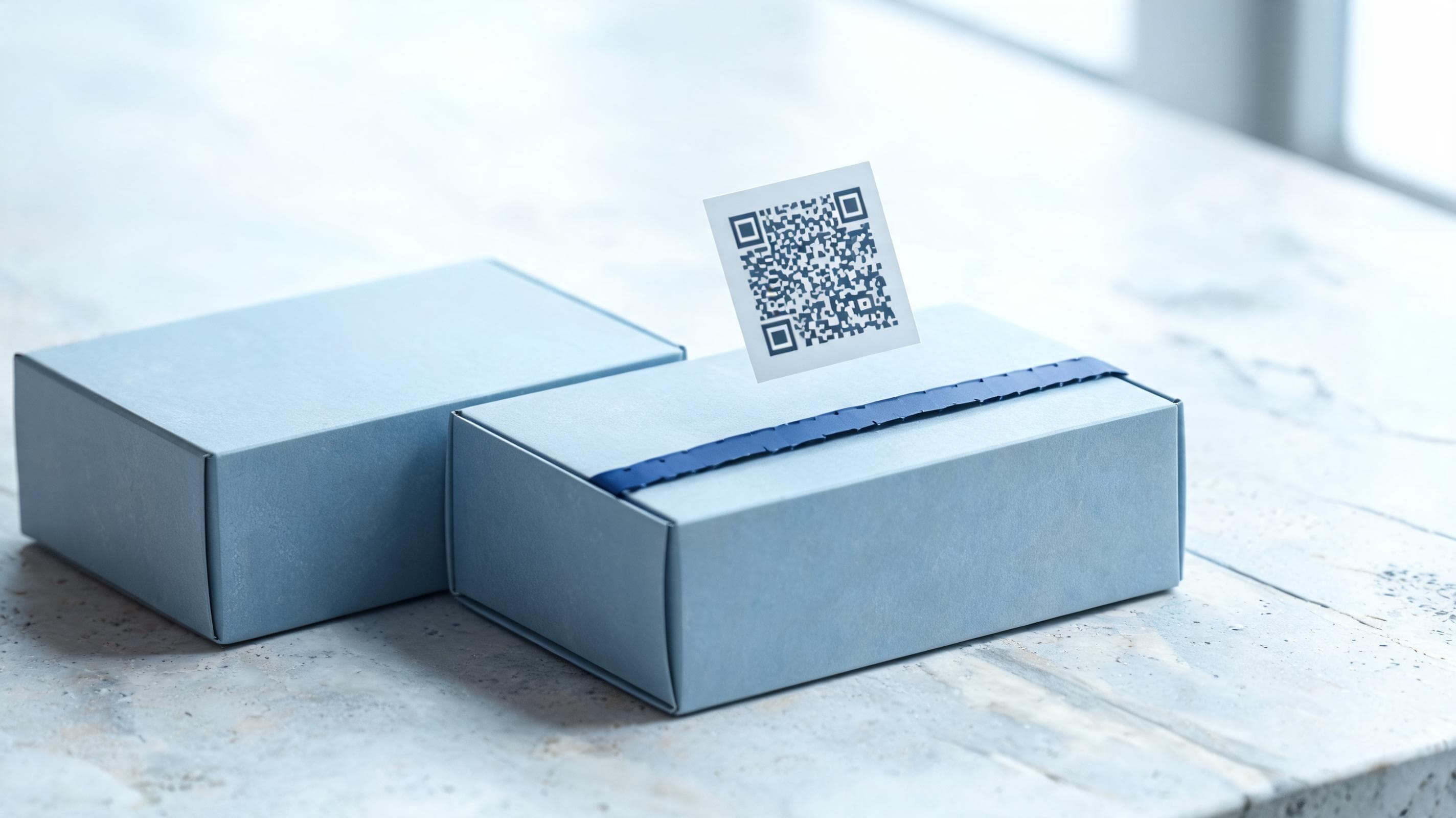
Physical features share one blind spot: they are static. Every unit carries the same seal, the same ink, the same hologram — so one successful copy defeats the feature on every unit. Serialized digital identity breaks that symmetry. Each unit carries a unique, cryptographically signed QR code that verifies against a live backend; copying one code produces a detectable duplicate, not a new valid unit.
Serialization is also the only layer that produces intelligence. Every consumer scan reports where your products — and your counterfeits — actually are. Duplicate serials surfacing across cities, verification failures clustering around one distributor, scans appearing in markets you never shipped to: this is the data that turns brand protection from anecdote into targeting. And it is the only layer the consumer can genuinely operate: anyone with a phone camera gets a definitive genuine/fake answer, rather than squinting at a hologram.
Building the right stack: combinations that work
The layers are complements, not competitors. Sensible stacks by category:
| Category profile | Recommended stack | Why |
|---|---|---|
| Mass-market FMCG (foods, personal care) | Serialized QR + induction seal | Refill and imitation are the threats; per-unit print cost must stay near zero |
| Liquor and premium beverages | Tamper-evident closure + shrink sleeve + serialized QR | Refill economy is the dominant attack; the QR adds consumer verification and bottle-level traceability |
| Pharmaceuticals | Serialized QR (GS1-based) + tamper-evident carton + covert ink | Regulatory serialization is arriving anyway; covert features support enforcement raids |
| Electronics and appliances | Serialized QR + VOID seal on carton | Identity powers warranty registration and grey-market detection alongside authentication |
| Agrochemicals and lubricants | Tamper-evident closure + serialized QR + covert ink | Refilling is endemic; rural buyers need a verification method that works on any phone |
| Apparel and textiles | Serialized QR on hang tag + woven security label | Highest illicit-market category in India; hang-tag serialization retrofits without changing garment production |
Execution details that make or break the stack
Feature selection gets the attention; execution quality decides the outcome. Four details worth settling before artwork is approved:
- Print quality and grading. A serialized QR that scans on a laser proof can fail on a production flexo run over textured film. Grade codes from real production samples, at the smallest size and worst substrate in your range, before locking artwork.
- Placement against seams and closures. Codes that fold over a carton edge, sit under a shrink-sleeve seam, or land in the crimp of a sachet become unreadable. Placement is a line-trial question, not a design-studio question.
- Seal and label adhesives for Indian conditions. Tamper labels that VOID cleanly in an air-conditioned lab can lift intact in a humid godown or delaminate in transit heat. Trial tamper evidence through your actual distribution environment.
- Artwork governance. Every protected SKU now has security-relevant artwork. Version control matters: an old artwork file without the code, still sitting with a converter, is how unprotected genuine stock leaks into a market you thought was covered.
Decision checklist before you buy anything
- Name the attack. Imitation, refill, or diversion? Rank them for your category — the ranking dictates the stack.
- Set the verification audience. Who must be able to check authenticity: consumers, your field force, customs? Each audience needs a different feature type.
- Price the feature against the unit. A protection stack that works for a bottle of spirits is wrong for a sachet. Serialized print scales down furthest because the mark costs nothing extra to print.
- Check line compatibility. Seals and sleeves add application steps; serialized codes need variable-data printing. Confirm your packaging lines or converters can execute before committing artwork.
- Plan the response, not just the detection. Decide in advance what happens when a fake is found: consumer messaging, evidence capture, enforcement escalation. Detection without response trains counterfeiters that scanning is safe.
- Pilot on the most-attacked SKU. Your bestseller is the counterfeiter's bestseller. Prove the stack there before rolling out the range.
Frequently asked questions
What is the most cost-effective anti-counterfeit feature for FMCG?
Serialized QR codes, in most cases: they ride on printing you already do, so per-unit cost stays in the LOW tier while adding consumer verification and scan analytics. Pair them with an induction seal where refilling is a risk. Expensive physical features are hard to justify on low-priced, high-volume packs.
Do consumers actually scan verification codes?
A minority of units get scanned — and that is enough. The counterfeiter cannot know which units will be checked, so every unit carries risk; meanwhile scans concentrate exactly where suspicion does, which is where you want the data. Incentives such as warranty activation or loyalty points raise scan rates further where the business case needs them.
Should secondary packaging be protected too?
Yes, in channel-driven categories. Case- and carton-level codes linked to unit codes (aggregation) let you trace which distributor a diverted or counterfeited batch travelled through, and tamper-evident cartons stop reboxing. Unit-level protects the consumer; case-level protects the channel.
How do security inks and serialized QR work together?
The ink authenticates the packaging substrate for inspectors; the QR authenticates the individual unit for everyone. In an enforcement raid, covert features prove packs are counterfeit on the spot, while the serial database proves scale and spread. They answer different questions and combine well.
Design your stack with real scan data behind it
Qrynto provides the digital layer of the stack: cryptographically signed per-unit QR identities, GS1 Digital Link native, with AI fraud scoring that maps counterfeit hotspots by region and channel as scans come in. If you are specifying packaging protection for the next artwork cycle, book a demo to pressure-test your stack, or see how serialization fits high-volume categories on our FMCG industry page.